Indicators
Timestamp an MT5 fractal when it becomes observable
Number the bars from left to right
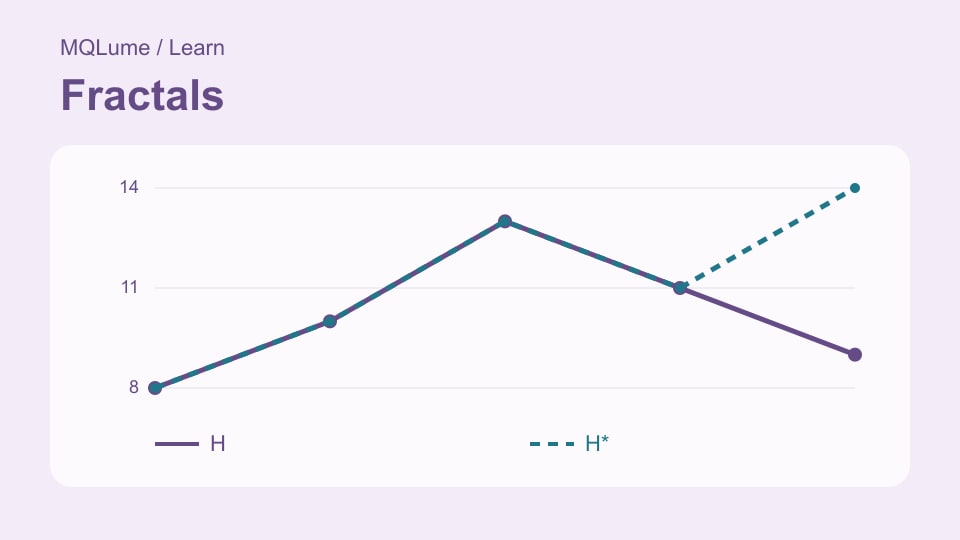
Use the simple five-bar upper pattern with strictly distinct highs: 8, 10, 13, 11 and 9. The middle bar has two lower highs on each side. The chart can draw an arrow over that middle candle, but a person standing at its close has seen only the two bars on the left.
Watch the fifth candle
Before the fifth candle closes, its high might still rise above 13. Replacing its final high of 9 with 14 invalidates the example. For a closed-bar rule, the first observation you can record is after the fifth bar completes. On a tick-driven chart that is ordinarily detected on the first tick of the following bar.
8 < 13 · 10 < 13 · 13 > 11 · 13 > 9Store two timestamps
Put the centre candle time in a pivot column and the completion time of the second right-hand bar in a confirmation column. If your code runs on the next tick, store the actual observation time as well. Matching an arrow's x-coordinate validates where you draw it, not when the program could have used it.
Test one failure case
Repeat the exercise with lows of 12, 10, 7, 9 and 11 for a lower fractal, reversing the comparisons so the centre low must be below its neighbours on both sides. Use distinct values for the timing test. Investigate equal highs or lows separately against the specific implementation instead of silently assuming your strict five-bar worksheet describes every tie.